

The Great Household Squeeze
Australia’s inflation problem is becoming much bigger than the price of groceries, petrol or electricity. With the RBA continuing to raise interest rates, Australian households are facing pressure from two directions: the rising cost of everyday essentials and the increasing cost of servicing the debt they already hold. For mortgage holders in particular, the combination can be devastating to their discretionary income, leaving considerably less money available for everything outside the household budget.
The difficulty is that inflation and interest rates don’t operate independently. When inflation rises, the RBA increases interest rates to discourage borrowing and spending, hoping to slow demand and bring prices under control. Unfortunately, households carrying substantial mortgages can end up paying twice. Their everyday living expenses continue to rise while their mortgage repayments increase, often by hundreds or even thousands of dollars each month.
And while inflation might eventually return to the RBA’s target range of 2–3%, that doesn’t mean prices return to where they were. A household that has experienced several years of elevated inflation is now paying permanently higher prices for many of the same goods and services. Even when inflation falls, those prices generally continue increasing, just at a slower rate.
The real damage becomes apparent when these increases compound over several years. Wages may rise, but unless household incomes grow sufficiently to cover both inflation and additional interest payments, families become progressively poorer in terms of what their income can actually purchase. Savings disappear, discretionary spending contracts and households that previously enjoyed comfortable financial positions can suddenly find themselves living from one pay cycle to the next.
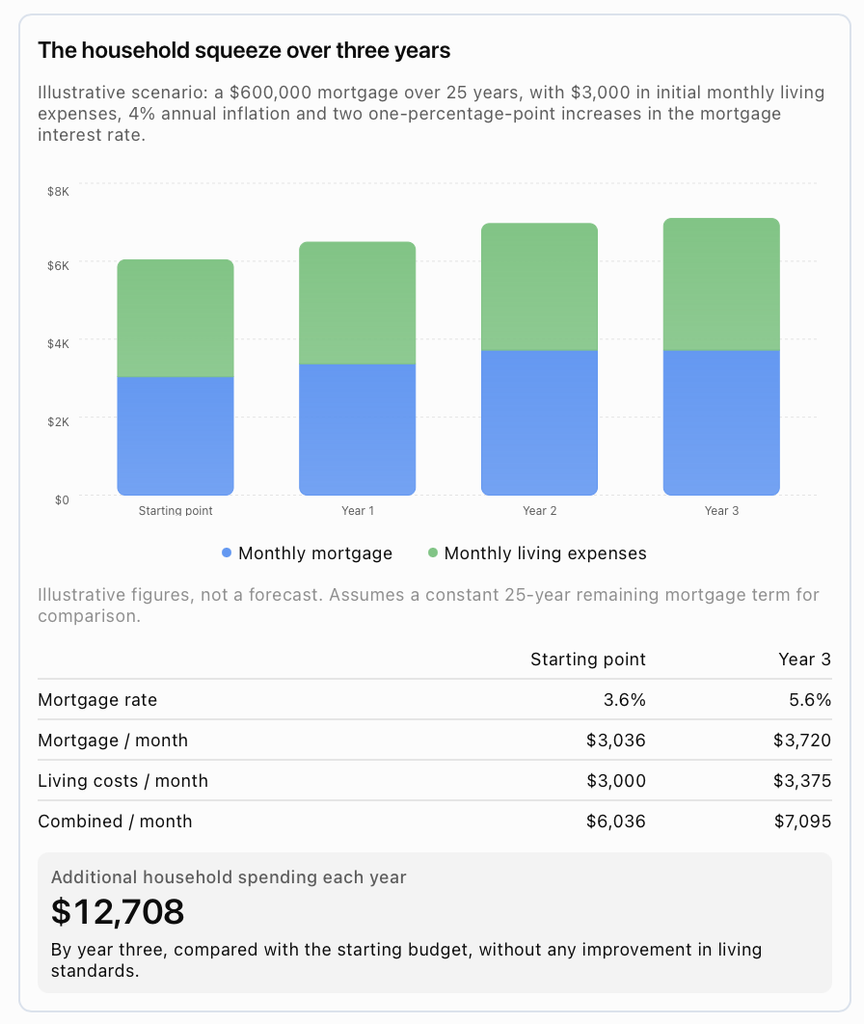
For a household earning $120,000 a year after tax, an additional $12,700 in annual expenses represents more than 10% of its entire take-home income. That’s money no longer available for savings, holidays, home improvements or supporting local businesses. If wages fail to keep pace, families must either reduce their standard of living, draw down savings or take on additional debt to maintain their existing lifestyle.
The wider economic consequences are equally concerning. When millions of households simultaneously reduce their spending, businesses experience weaker sales, investment slows and employment can come under pressure. Smaller businesses are particularly exposed because they often face their own rising borrowing costs while customers become increasingly reluctant to spend.
There is also an uncomfortable imbalance in how the burden is distributed. Households with substantial savings and little debt can benefit from higher deposit rates, while heavily indebted families face rising repayments. Renters aren’t necessarily insulated either, with landlords potentially passing on some of their higher financing costs where rental market conditions allow.
The RBA’s challenge is to bring inflation under control without causing unnecessary economic damage. Higher interest rates can eventually reduce inflation, but they cannot directly resolve every source of rising prices, particularly international energy disruptions or supply shortages. In the meantime, Australian households are left managing the immediate consequences of both higher prices and more expensive debt.
As we head into the final quarter of 2026, the question is no longer simply how much further interest rates might rise. It’s how much additional financial pressure Australian households can absorb before reduced consumer spending begins to weigh more heavily on the broader economy.
This article is general market commentary only and should not be relied upon as personal financial advice. Consider the information carefully, conduct your own independent assessment and seek professional advice where appropriate before making any investment decision.


