Rising Rates Put Australian Businesses Under Pressure
Gold Spot Price AUD $5931.44
Silver Spot Price AUD $87.18
Platinum Spot Price AUD $2428.43
Australia’s insolvency numbers are starting to look increasingly uncomfortable, particularly as higher interest rates begin working their way through businesses carrying large amounts of debt.
The recent collapse of property developer Bathla Group has added considerably to the numbers. Bathla reportedly collapsed with around $3.4 billion in creditor claims, but the failure extends well beyond a single company. The group operated through a large network of subsidiaries and individual project companies, with hundreds of related entities now caught up in the collapse. The RBA has already warned that this will have a noticeable impact on Australia’s insolvency statistics for the September quarter.
While Bathla is an unusually large example, the broader numbers aren’t particularly reassuring either. More than 14,000 Australian companies entered external administration for the first time during the 2025–26 financial year, with construction continuing to represent almost a quarter of insolvencies. Hospitality, retail and other businesses operating on relatively tight margins are also feeling the pressure.
The concern now is what happens as Australia’s recent interest rate rises properly feed through the economy. Businesses carrying variable debt are seeing borrowing costs increase, while companies refinancing existing facilities may suddenly find that debt which was manageable a few years ago has become considerably more expensive. Their customers are dealing with much the same problem through higher mortgage repayments, rents and general living costs, leaving less money available to spend throughout the economy.
This is where business insolvencies become more than a story about individual companies failing. One business going under can leave suppliers unpaid, contractors out of pocket and employees looking for work. Enough of those failures begin feeding into weaker spending, lower investment and reduced confidence, placing further pressure on other businesses already struggling with higher costs.
Importantly, insolvency numbers also tend to arrive well after the financial pressure begins. Businesses will generally reduce costs, delay investment, stretch supplier payments, negotiate with lenders or burn through cash reserves before finally reaching insolvency. The companies failing today are therefore not necessarily showing us the impact of the latest rate increases.
That impact may still be coming, and it creates an interesting environment for investors. For much of the past decade, cheap debt helped support property prices, business investment and sharemarket valuations. As the cost of that debt increases, investors naturally become more selective about where they hold their money. Cash becomes more attractive as interest rates rise, highly leveraged investments become harder to justify, and assets without an attached debt obligation can begin to look quite different.
Gold and silver sit within that conversation. They don’t depend on a company generating enough profit to service its borrowings, and they aren’t directly tied to whether a property developer, bank or government borrower can continue meeting its obligations. That doesn’t make bullion immune from price movements, but it does give precious metals a different risk profile when debt is becoming one of the economy’s biggest problems.
For Australians there is also the currency side of the equation. Gold and silver are internationally priced, so movements in the Australian dollar can influence local bullion prices at the same time as global investors are responding to interest rates, inflation and financial stress.
Bathla is an extreme example, but it provides a fairly stark reminder of what leverage can do when financial conditions change. After years where cheap money encouraged businesses and households to carry larger debts, the cost of carrying that debt is rising again.
That doesn’t mean everything suddenly falls over. It does mean the next few quarters could expose more businesses that were comfortable at lower rates but considerably less comfortable today. In that environment, having some wealth sitting outside the debt-heavy parts of the economy starts to make a little more sense — which is exactly why gold and silver tend to find their way back into the conversation when financial conditions become uncertain.
This article is general market commentary only and should not be relied upon as personal financial advice. Consider the information carefully, conduct your own independent assessment and seek professional advice where appropriate before making any investment decision.
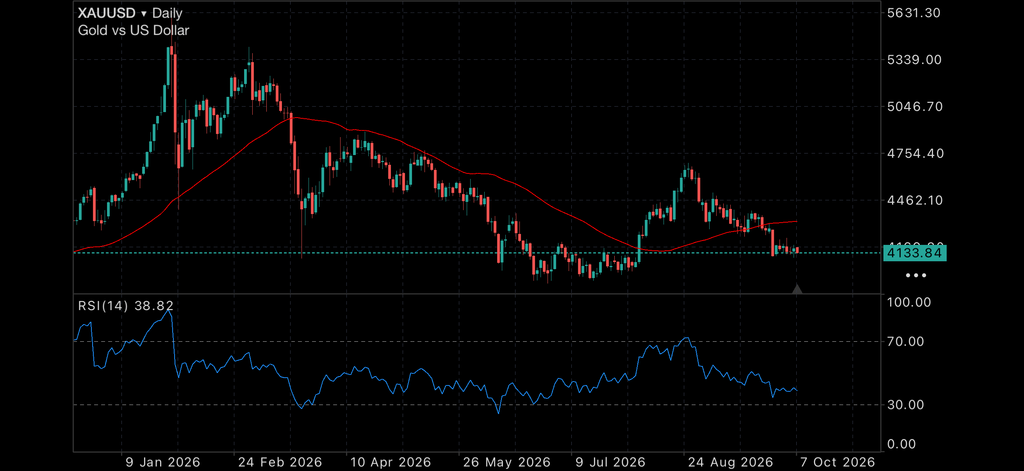
Gold daily chart, with 50MDA
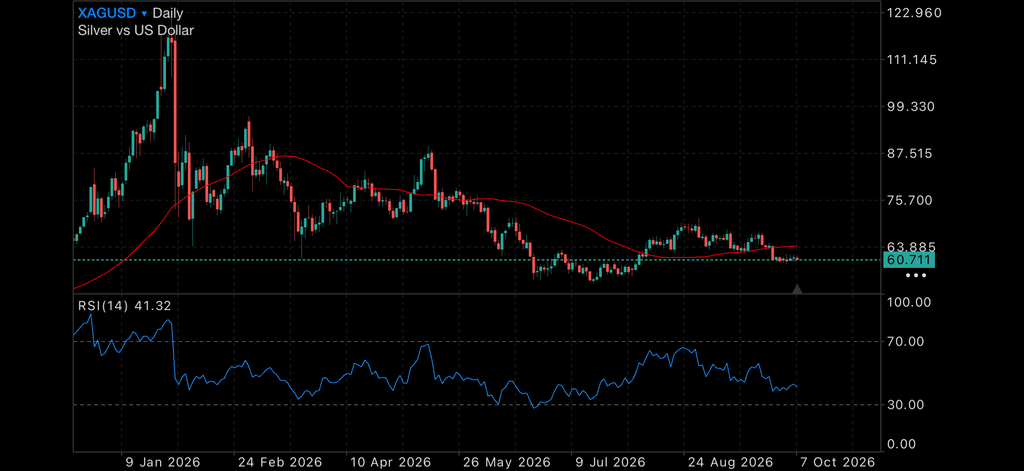
Silver daily chart, with 50MDA
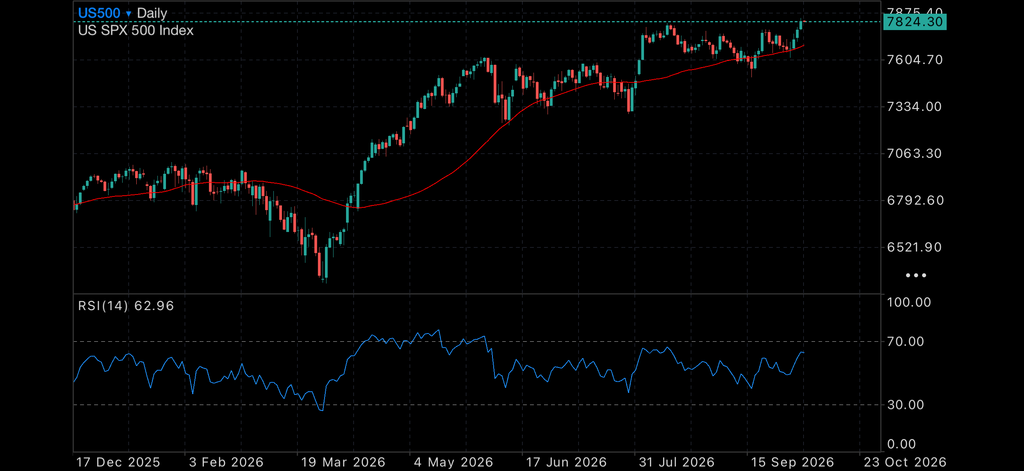
US500, with 50MDA
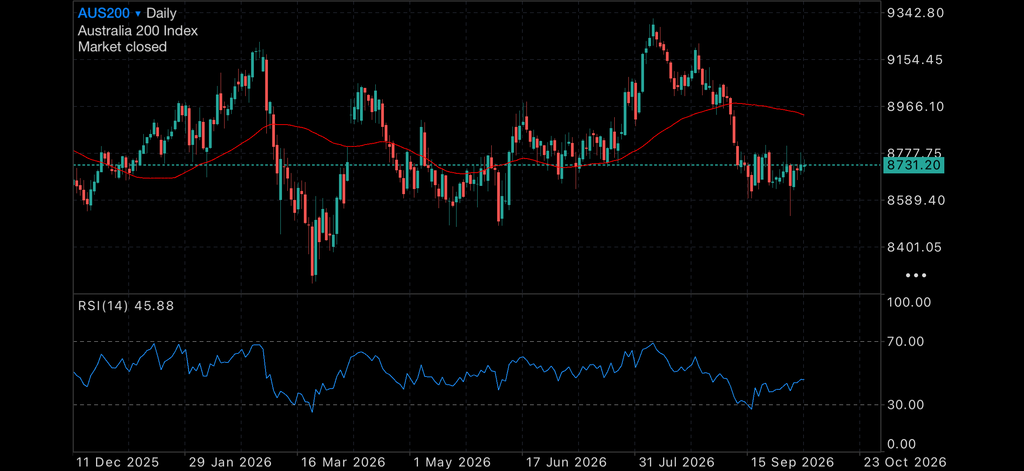
ASX200, with 50MDA