

RBA Loses Billions as Australia’s Economic Outlook Darkens
Gold Spot Price AUD $6020.59
Silver Spot Price AUD $82.88
Platinum Spot Price AUD $2358.94
Australia’s economic outlook took another uncomfortable turn this week, with unemployment reaching a five-year high just as the Reserve Bank of Australia revealed an extraordinary $11.3 billion annual loss. For a central bank tasked with keeping the economy stable, the timing could hardly be worse, particularly as households and businesses continue struggling with higher interest rates and persistent inflation.
Australia’s unemployment rate now sits at 4.7%, with the economy shedding 39,300 jobs in September, suggesting the labour market is beginning to feel the weight of tighter monetary policy. The figures have dramatically changed expectations for the RBA’s next move, with the probability of another November rate hike falling from 31% to just 15%. Only weeks ago, another increase appeared increasingly likely, but rising unemployment has forced markets to reconsider just how much more pressure the economy can withstand.
The RBA now finds itself in a difficult position. Inflation remains a concern, yet the very interest rate increases designed to control it are also making mortgages more expensive, restricting business investment and reducing household spending. Higher unemployment may eventually help bring inflation under control, but it comes at a considerable cost to ordinary Australians, many of whom have already watched their purchasing power deteriorate over recent years.
Meanwhile, the RBA’s own financial position has attracted considerable attention. Its latest annual report revealed an $11.3 billion accounting loss, the second-largest in its history, largely driven by falling valuations across its bond portfolio as yields increased. The result has pushed the central bank’s equity position approximately $1 billion into negative territory, with expectations that it may not return dividends to the federal government for another decade.
Perhaps more surprising is that while the RBA has been encouraging restraint across the broader economy, its own workforce has continued expanding. Staff numbers increased 8% over the past year to 2,201 employees, representing growth of approximately 60% since 2021. Much of this expansion reflects technology and corporate support, although the contrast with rising unemployment and financially stretched households is unlikely to escape public attention.
Of course, the RBA’s losses are largely accounting losses rather than the equivalent of a commercial bank running out of money. A central bank can continue operating with negative equity, although the result highlights the financial consequences of the extraordinary monetary policies introduced during the pandemic.
For investors, the combination of rising unemployment, stubborn inflation and an uncertain interest rate outlook is creating an uncomfortable environment. The Australian dollar has weakened against the US dollar following the employment figures, despite the RBA having lifted rates four times this year. A weaker currency also makes imported goods and energy more expensive, potentially adding another layer of inflationary pressure.
This is where gold and silver become particularly interesting. Precious metals have traditionally attracted attention when confidence in economic growth, currencies and financial markets begins to deteriorate. While bullion is not immune to price corrections, gold priced in Australian dollars can also benefit from a weakening local currency, providing investors with some protection against declining purchasing power.
The RBA’s next meeting on 3 November is shaping up to be one of its most difficult decisions this year. With inflation still elevated, unemployment rising and businesses facing considerable financial pressure, Australia may be approaching the point where further interest rate increases cause more economic damage than the inflation they are intended to control.
The bigger question is whether the RBA can bring inflation under control without pushing Australia’s already fragile economy into something considerably worse.
This article is general market commentary only and should not be relied upon as personal financial advice. Consider the information carefully, conduct your own independent assessment and seek professional advice where appropriate before making any investment decision.
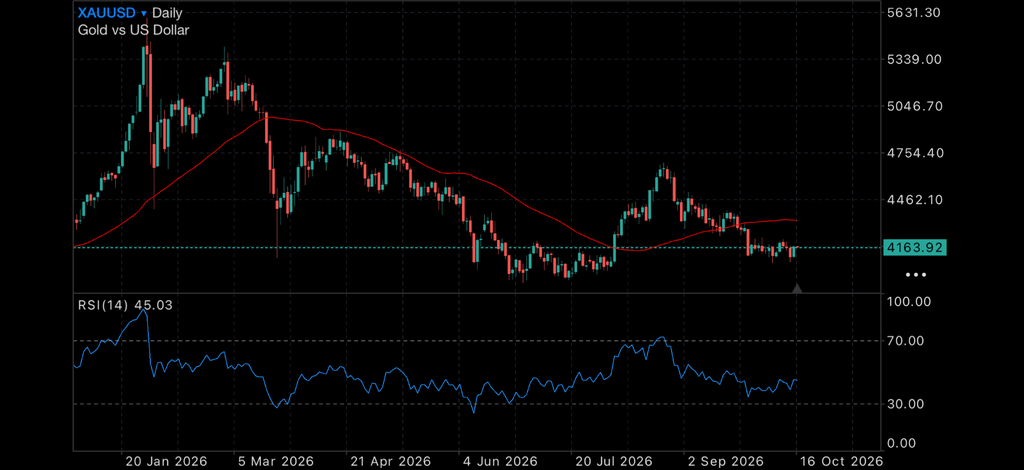
Gold daily chart, with 50MDA
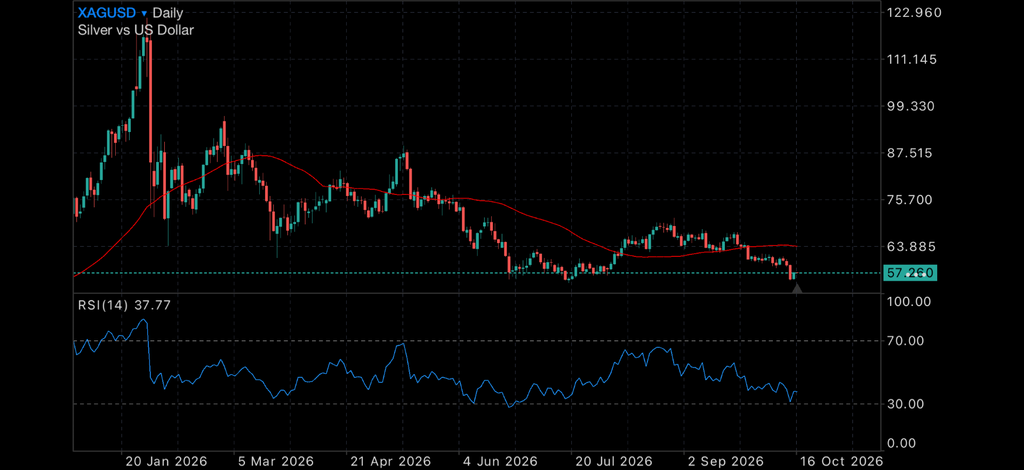
Silver daily chart, with 50MDA
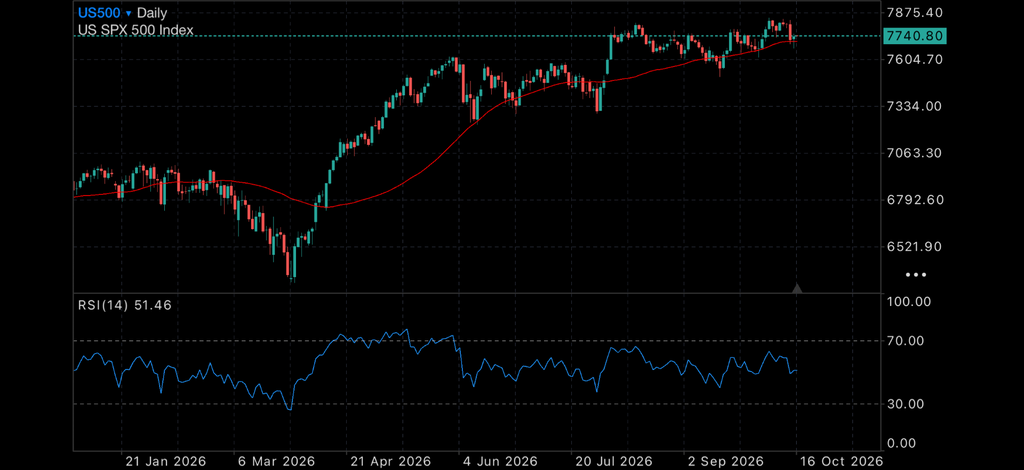
US500, with 50MDA
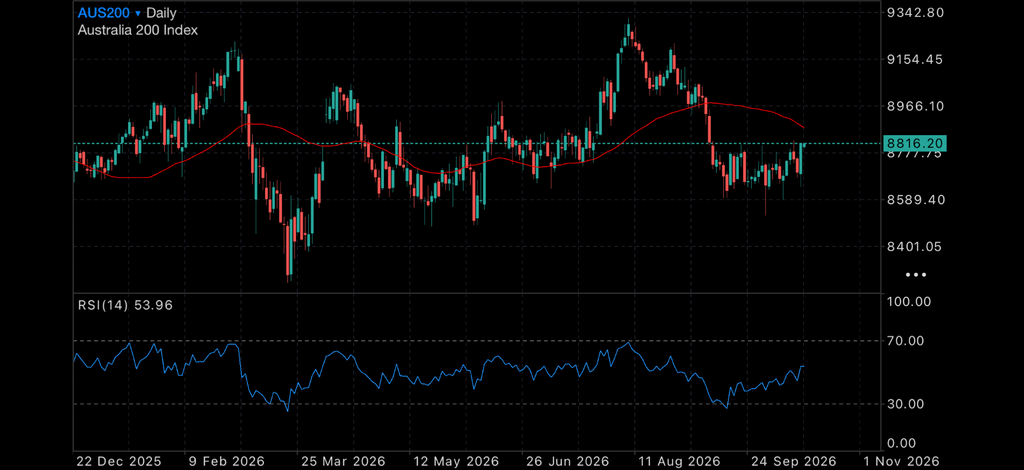
ASX200, with 50MDA