



Australia’s Jobs Market Faces a Tougher Road as RBA Prioritises Inflation
Gold Spot Price AUD $5959.83
Silver Spot Price AUD $84.75
Platinum Spot Price AUD $2385.80
Australia’s employment market is entering an uncomfortable period, with the Reserve Bank increasingly prepared to tolerate weaker economic growth and higher unemployment in its ongoing battle against inflation. For Australians already struggling with rising living costs, the prospect of a softer jobs market adds another layer of uncertainty.
Unemployment has been hovering around 4.5% to 4.6%, considerably higher than the historic lows of approximately 3.5%. While these figures are hardly disastrous by historical standards, the direction is becoming increasingly important. The RBA has spent years attempting to bring inflation under control without causing significant damage to employment, but persistent price pressures are making that balancing act considerably more difficult.
The concern is that higher interest rates don’t simply discourage consumer spending. They also increase borrowing costs for businesses, reduce investment and make employers more cautious about hiring. With wage growth showing signs of easing, Australians could find themselves facing the uncomfortable combination of weaker employment opportunities, slower income growth and living expenses that remain stubbornly high.
For the RBA, this creates a difficult situation. A cooling labour market may help reduce inflation, but pushing unemployment too far risks weakening the broader economy. Households with mortgages are particularly exposed, as higher repayments continue to absorb income that would otherwise circulate through local businesses.
The RBA’s September meeting minutes suggest that policymakers are becoming more willing to accept slower employment growth if that’s what it takes to bring inflation back towards target. Although the Bank still wants to preserve employment gains, its priority is increasingly clear, particularly with global energy costs and domestic price pressures continuing to complicate the outlook.
For financial markets, a weakening employment outlook could encourage investors to reconsider their exposure to risk. Shares and other growth-sensitive investments generally perform better when businesses are expanding and consumers are spending, while periods of economic uncertainty can increase interest in defensive assets.
This is where gold and silver become particularly interesting. Physical bullion offers an alternative to traditional financial markets, particularly for investors concerned about inflation, currency weakness and deteriorating economic conditions. Gold has historically attracted safe-haven demand during periods of uncertainty, although both metals remain exposed to price volatility, with silver generally more sensitive to industrial demand.
The question now is whether the RBA can bring inflation under control before Australia’s employment market suffers more significant damage. With higher interest rates already weighing on households and businesses, investors may increasingly look towards defensive assets as the economy navigates what could be a difficult period.
This article is general market commentary only and should not be relied upon as personal financial advice. Consider the information carefully, conduct your own independent assessment and seek professional advice where appropriate before making any investment decision.
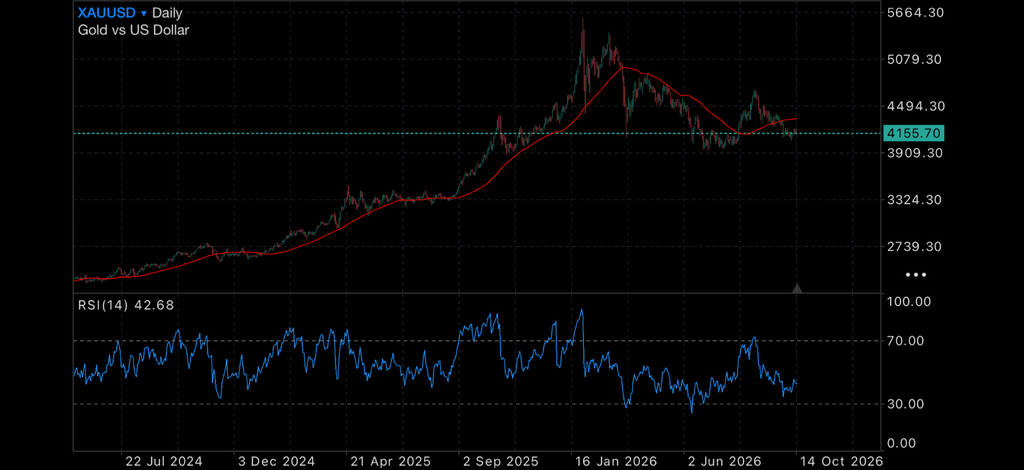
Gold daily chart, with 50MDA
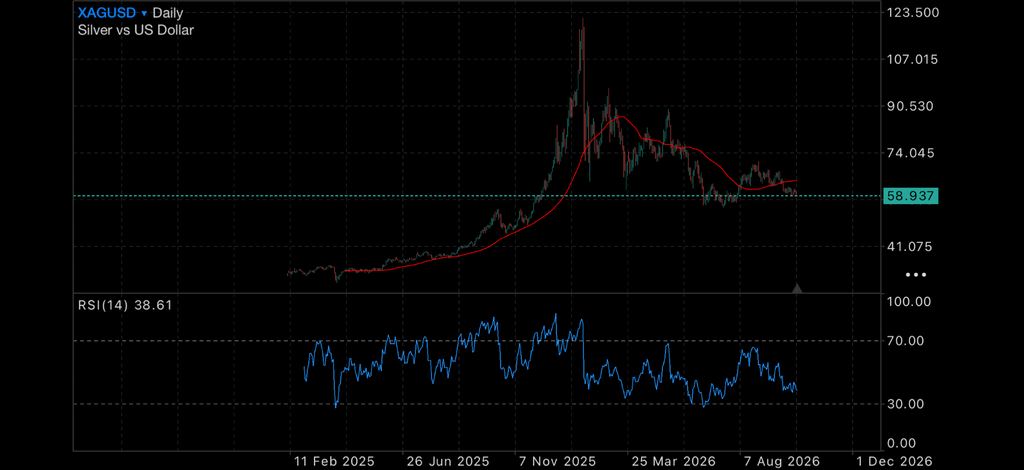
Silver daily chart, with 50MDA
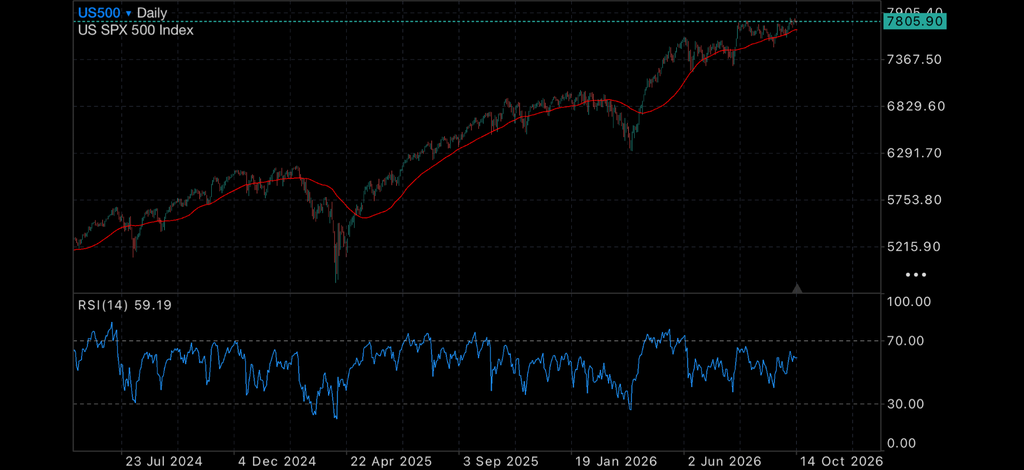
US500, with 50MDA
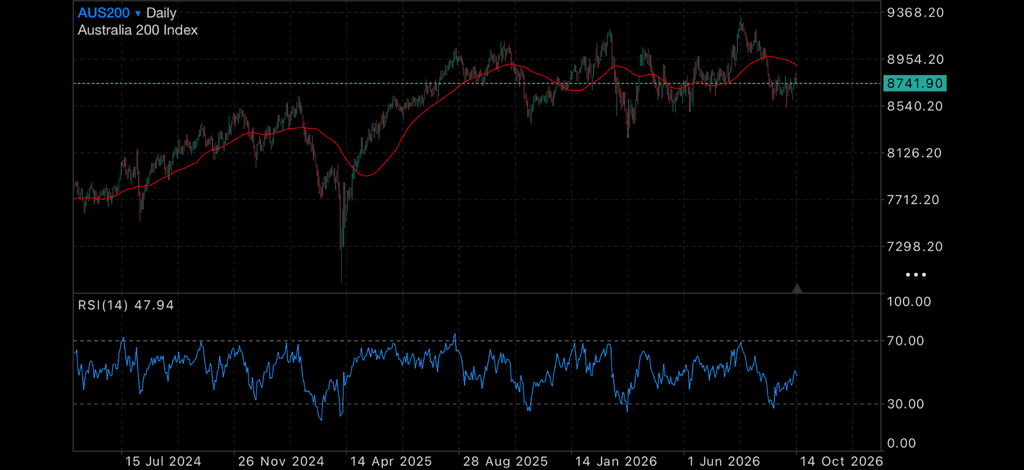
ASX200, with 50MDA