Silver’s Growing Role in a Changing World
Gold Pricing $6254.61
Silver Pricing: $104.74
Platinum Pricing: $2698.82
For decades, gold has worn the crown as the world’s most recognised precious metal. It remains the asset investors turn to during periods of uncertainty, inflation concerns and geopolitical tension. Yet as technology continues to reshape the global economy, silver is increasingly finding itself at the centre of a very different conversation.
Unlike gold, silver carries a dual identity. It is both a precious metal and an industrial metal, making it uniquely positioned for a future driven by electrification, artificial intelligence, robotics and renewable energy. Silver is used extensively in solar panels, electronics, batteries, medical equipment and advanced computing systems. As governments and corporations continue investing heavily in these sectors, demand for silver is expected to grow well beyond traditional jewellery and investment markets.
Many investors monitor the Gold-to-Silver Ratio (GSR), which compares the price of gold to silver. At present, the ratio sits around 60:1, meaning one ounce of gold can purchase approximately sixty ounces of silver. Historically, ratios above 80:1 have often signalled that silver may be undervalued relative to gold. Today’s reading, however, sits much closer to long-term averages and suggests neither metal is particularly cheap or expensive compared to the other.
That makes the current silver story less about valuation and more about future demand. If artificial intelligence infrastructure continues expanding, if robotics become increasingly common throughout manufacturing and logistics, and if renewable energy projects remain a priority around the world, silver may benefit from a powerful combination of industrial consumption and investment demand. Gold remains the traditional safe-haven asset, but silver increasingly occupies a position somewhere between economic growth and wealth preservation.
Meanwhile, headlines surrounding Iran, the United States and the Strait of Hormuz appear to be having less impact on markets than they did only a few weeks ago. News that once caused immediate reactions in oil, currencies and precious metals is now being absorbed with far less urgency.
That does not mean the situation has been resolved. The global economy is still dealing with the consequences of months of uncertainty surrounding one of the world’s most important energy corridors. Higher fuel costs have flowed through supply chains, manufacturing costs and household budgets, contributing to inflationary pressures that many central banks continue to wrestle with today.
What has changed is investor behaviour. Markets have become accustomed to the headlines, requiring genuinely new developments before reacting in a meaningful way. The immediate shock has faded, but the economic after-effects remain very real.
For precious metals investors, this creates an interesting backdrop. Gold continues to perform its traditional role as a store of wealth during uncertain times. Silver, however, may be developing an additional source of support. As the world invests in artificial intelligence, automation and cleaner energy systems, demand for silver could increasingly be driven by the technologies shaping the next generation of economic growth.
Enjoy today’s charts
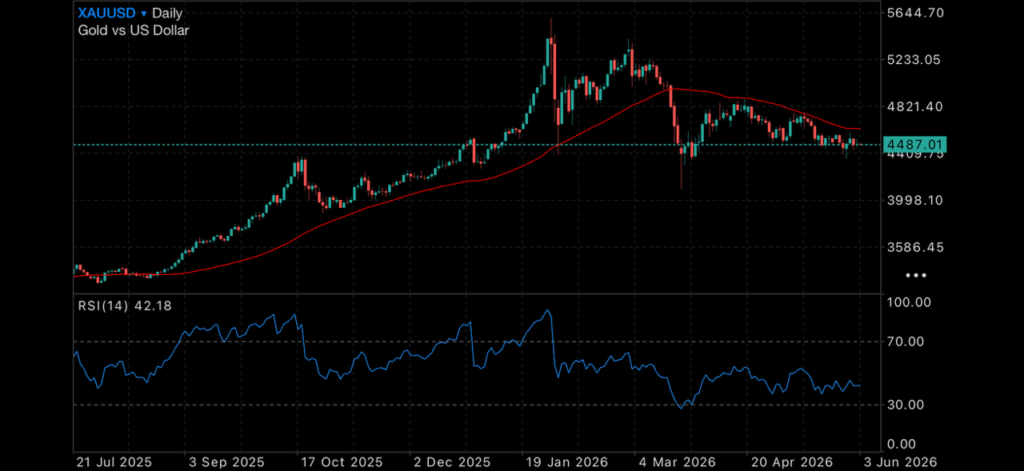
Gold daily chart, with 50MDA
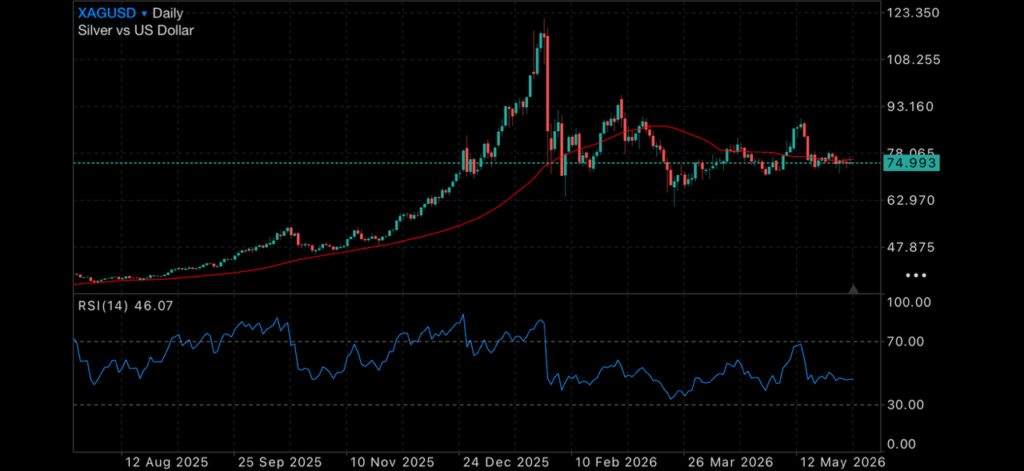
Silver daily chart, with 50MDA
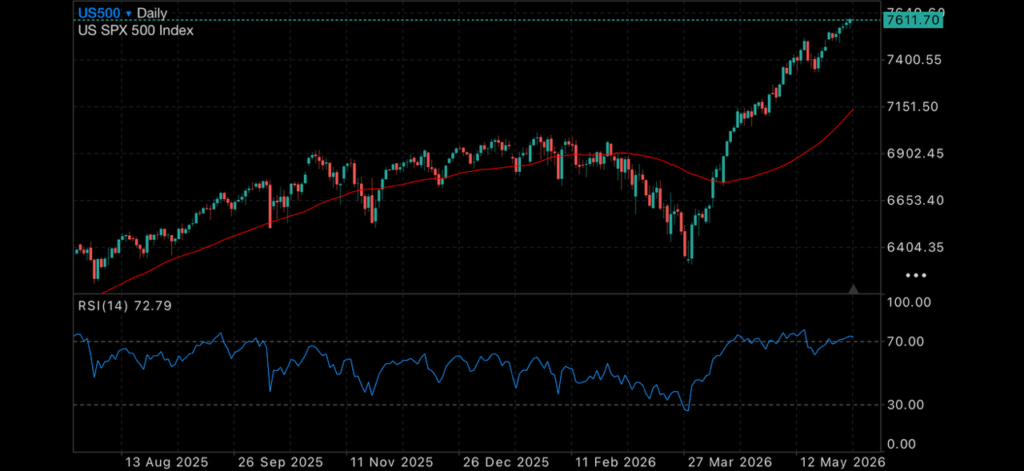
US500, with 50MDA
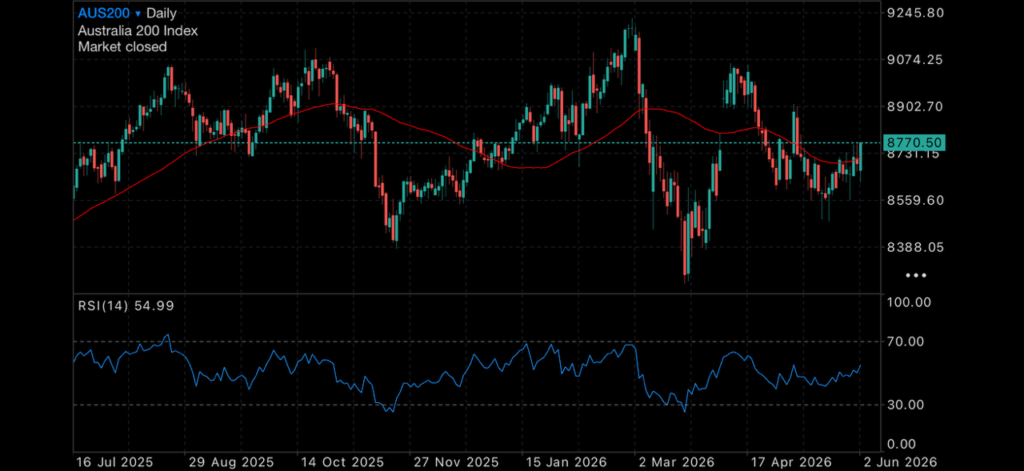
ASX200, with 50MDA